
Table of content
- Introduction
- Key Takeaways
- What Is a Psychometric Test for Recruitment?
- The Three Types of Psychometric Tests Used in Hiring
- What a Psychometric Test Cannot Tell You
- Where a Psychometric Test for Recruitment Fits in Your Hiring Process
- How to Use Psychometric Testing Fairly
- What to Check Before You Choose an Assessment
- How the PRISM Brain Map Is Used in Recruitment
- Bringing Assessment Capability In-House
- Frequently Asked Questions

Introduction
Hiring decisions are still made largely on two things: a CV and a conversation. Both are useful. Neither is consistent. A psychometric test for recruitment adds a third input – a standardized, validated measure of how a candidate thinks, communicates and behaves at work – so that your shortlist is judged on evidence rather than on who interviewed well on the day.
Used properly, it makes hiring more consistent and less vulnerable to bias. Used carelessly, it becomes a pass/fail filter it was never designed to be.
According to the World Economic Forum’s Future of Jobs Report 2025, employers expect 39% of workers’ existing skill sets to be transformed or become outdated between 2025 and 2030, and 63% name skills gaps as the single biggest barrier to business transformation. When the skills you are hiring for keep moving, how a person learns, adapts and works with others becomes as important as what they already know. That is precisely what a behavioural assessment measures.
This guide covers what these tests actually measure, where they belong in your hiring process, how to keep them fair, what to check before you buy one, and how the PRISM Brain Map is used in selection.
Key Takeaways
- A psychometric test for recruitment measures reasoning ability or workplace behaviour using a standardized, validated questionnaire.
- Ability tests can be scored and screened on. Behavioural assessments cannot be passed or failed.
- The strongest use is at shortlist stage, to shape a structured interview – not at the top of the funnel as a filter.
- Test results should never be the sole basis for a hiring decision.
- The same profile that informs your hire should follow the person into onboarding and development.
What Is a Psychometric Test for Recruitment?

A psychometric test for recruitment is a standardized, validated questionnaire used during hiring to measure a candidate’s reasoning ability or their typical workplace behaviour. Every candidate answers the same items under the same conditions, and results are interpreted against a comparison group – which is what makes the output comparable across candidates in a way that an interview impression is not.
The word “psychometric” simply means measurement of the mind. It is not a scan, a screening, or a medical procedure of any kind.
The Three Types of Psychometric Tests Used in Hiring
1. Ability and aptitude tests
These measure what a candidate can do right now – numerical reasoning, verbal reasoning, logical or abstract reasoning, and role-specific aptitude. They are timed, they have correct answers, and they produce a score. This is the only category where a cut-off is defensible, and even then the cut-off should come from analysis of the role, not from convenience.
2. Behavioural and personality assessments
These measure how a candidate prefers to work – how they respond to pressure, how they make decisions, how much structure they need, how they communicate. There are no right answers and no scores to rank people by. What you get is a profile.
3. Emotional intelligence assessments
These sit across both categories, measuring self-awareness, self-regulation, and how accurately a person reads and responds to other people. For customer-facing, managerial and team-lead roles, this is often the most decision-relevant of the three.
What a Psychometric Test Cannot Tell You
Being clear about the limits is what separates organizations that get value from testing from organizations that get complaints about it. A psychometric test for recruitment will not tell you:
- Whether a candidate is motivated on a particular day
- Technical skill you have not separately assessed
- Cultural fit as a yes-or-no verdict
- Whether someone will still be in the role in three years
A behavioural profile tells you how a person is likely to work. It does not tell you whether to hire them. That decision stays with your hiring panel – informed by the profile, never replaced by it.
Where a Psychometric Test for Recruitment Fits in Your Hiring Process
The most common mistake organizations make is putting the assessment first and using it to cut the pile. That inverts what these tools are good at.
Here is a sequence that works:
Step 1 – Application screen.
Role requirements, non-negotiables, eligibility. No assessment yet.
Step 2 – Ability test, if the role warrants it.
Reasoning or aptitude testing for roles where analytical throughput genuinely matters. This is your screening stage.
Step 3 – Behavioural assessment at shortlist.
Administered to the candidates you are seriously considering, before the final interview. Not to filter – to inform.
Step 4 – Structured interview built from the profile.
This is where the value actually lands. If a report suggests a candidate is highly independent and low on process orientation, ask them about a time they had to deliver inside a rigid framework. A competency based interview built from evidence beats a generic question bank every time.
Step 5 – Decision, then onboarding.
Carry the profile forward. The same report that helped you hire tells the new manager how to brief, delegate to and give feedback to this person in week one instead of month six.
That final step is where most organizations leave value on the table. The assessment gets treated as a hiring gate and then filed away. It is far more useful as a handover document – which is why smart talent onboarding and selection should be designed together, not separately.
How to Use Psychometric Testing Fairly
Psychometric testing is often defended on the grounds that it reduces bias. It can – but only if the process around it is sound.
The UK’s Chartered Institute of Personnel and Development is direct on this point in its selection methods factsheet: while “standardised tests or tests of cognitive ability can be good predictors of job performance, especially for occupations that require complex thinking,” it also states plainly that “test results should never be the sole basis for a selection decision.” The CIPD also notes that structured interviews are “an effective way to minimise bias and ensure there is a level playing field for candidates from marginalised groups.”
Six rules worth writing into your hiring policy:
1. Decide what you are measuring, and why, before you see any results.
Justifying a preference after the fact is bias with a spreadsheet attached.
2. Never reject a candidate on a behavioural profile alone.
There is no wrong profile. Rejecting people because their working style differs from the incumbent team’s is how organizations build a monoculture and call it culture fit.
3. Use validated instruments.
A free online quiz is not a psychometric test. Ask any provider for reliability and validity evidence and for the norm group your candidates are being compared against. The British Psychological Society’s Psychological Testing Centre sets out the standards a properly constructed instrument is expected to meet.
4. Have results interpreted by someone trained.
Reports are easy to over-read. A trained practitioner will tell you what a report does not support – which is exactly the part an untrained reader skips.
5. Give candidates their results.
It costs nothing, and it is the most reliable way to make assessment feel fair rather than extractive – particularly for the candidates you do not hire.
6. Handle the data properly.
Assessment results are personal data. Under India’s Digital Personal Data Protection Act, 2023, you need a clear purpose, informed consent, and a retention limit. Tell candidates what you are collecting, why, and how long you will keep it.
What to Check Before You Choose an Assessment
If you are comparing talent assessment tools, these are the questions that separate a serious instrument from a branded questionnaire – in rough order of importance:
| What to check | What a good answer looks like |
|---|---|
| Validation evidence | Published reliability and validity data, and a clear account of the model behind the instrument |
| Depth of output | A report you can build a development plan from, not a one-page type label |
| Adapted behaviour | The instrument distinguishes natural preference from behaviour modified under work pressure |
| Interpretation support | Accreditation available so your own team can read reports in-house |
| Cost model | Transparent per-report credits or licensing, with clear volume pricing |
| Local support | Support and turnaround in your time zone, not eight hours behind you |
That third row deserves emphasis. Most instruments give you one picture of a person. People behave differently under work demands than they do naturally, and an assessment that cannot separate the two is telling you half the story – the half least useful for predicting whether someone will sustain a role.
How the PRISM Brain Map Is Used in Recruitment
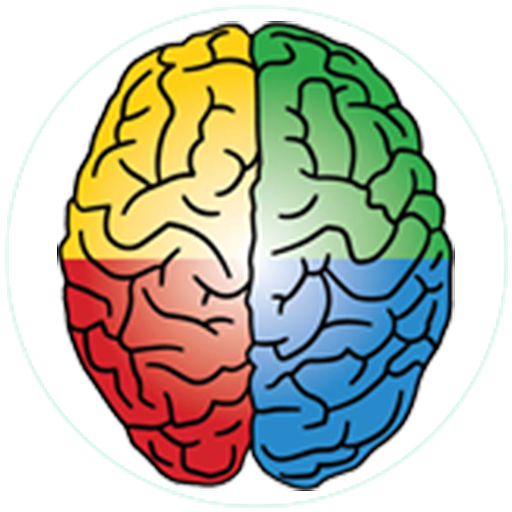
The PRISM Brain Map is a behavioural assessment built on applied neuroscience research. It measures preference across eight behavioural dimensions, and it produces three distinct views of a person rather than one:
- The Underlying Map – natural, instinctive behavioural preference
- The Adapted Map – how the person modifies their behaviour to meet the demands of their current role
- The Consistent Map – the behaviour that holds steady across both
For hiring, the Adapted Map is often the most revealing. It shows how far a candidate is already stretching to meet a role’s demands – a far better early signal of whether a role is sustainable for them than a single personality label.
The PRISM Professional report runs to 60 pages and covers 26 aspects of work preference, alongside an emotional intelligence analysis and a Big Five summary. Recruit Right, PRISM’s recruitment benchmarking application, lets you build a behavioural benchmark from the role itself – and from people already performing it well – then compare candidates against that benchmark rather than against a generic ideal.
You can read more about the science behind PRISM and what PRISM measures.
An Important Clarification
PRISM Brain Map is a behavioural questionnaire, not a medical or clinical instrument. There is no brain scan, no equipment, no electrode, and no diagnostic claim of any kind. The word “map” describes a behavioural profile – nothing more. This is worth stating plainly, because “brain mapping” is also used in clinical settings to describe something entirely different.
PRISM Brain Map India is the Official Master Distributor for PRISM Brain Mapping Worldwide, based in Kent, United Kingdom, across India and Sri Lanka, and also works with clients in Indonesia and Malaysia on a tailored basis. PRISM has been in use in India since 2009. PRISM Brain Mapping® is a registered trade mark of The Center for Applied Neuroscience.
Bringing Assessment Capability In-House
Organizations that hire at any volume eventually reach a point where routing every report through an external consultant stops making sense – commercially and operationally.
The alternative is to have your own HR, L&D or talent team accredited to administer and interpret PRISM directly. That also makes the instrument available for everything beyond selection: team development, leadership programmes, coaching and succession planning.
No prior assessment experience is required to enter the programme. More than 350 Accredited PRISM Practitioners have been trained in India to date.
Frequently Asked Questions
Trusted by some of the biggest brands









Fill out the form below to connect with an Accredited PRISM Practitioner, or email [email protected].Contact PRISM Brain Map India →